
Remote work is now so familiar that much of the attention goes to fitting calls into the day, keeping them short and making them productive. That focus on time and scheduling can push a more important issue aside: the quality of communication.

How can leaders manage remote teams well? Which communication practices help people feel welcome, recognised and genuinely part of the organisation?
A Speexx masterclass with Lucy Williams shows how clarity, psychological safety and intercultural awareness can improve remote work in global teams.
In teams distributed around the world, communication means more than exchanging updates. It gives direction, builds trust and reduces ambiguity when tone of voice, body language and informal moments are easy to lose.
To help teams communicate across cultures, recognise effective practices and leave with tools they could use the next day, Speexx organised the masterclass Communication as a Leadership Tool. Andreas Urban, COO of Speexx, opened the session, which was led by Lucy Williams, a Business English trainer with experience in intercultural training.
The starting point was clear: remote teams do not necessarily communicate less than teams in the same room. They communicate under different conditions, where every word carries more weight.
The following sections draw out ideas from the masterclass for people who joined live and those watching it for the first time.
Why communication matters even more in remote teams
Andreas Urban made the point at the start of the session. When a team works remotely, many of the signals that support understanding in person disappear.
Teams lose tone, posture and facial expressions. They also lose the informal moments that help people align, resolve doubts and correct misunderstandings before they become problems. In an office, a lift ride, a coffee or a quick visit to someone’s desk can settle an issue in minutes. At a distance, the same issue can grow.
Many familiar remote-work difficulties therefore come from communication rather than a lack of skills. A poll during the masterclass identified recurring problems: misunderstanding, silence, unclear messages and poorly defined responsibilities. People often know what needs to happen, but not who will do it.
Over time, these problems produce concrete effects. Work is duplicated, projects slow down, trust weakens and some people withdraw or participate less.
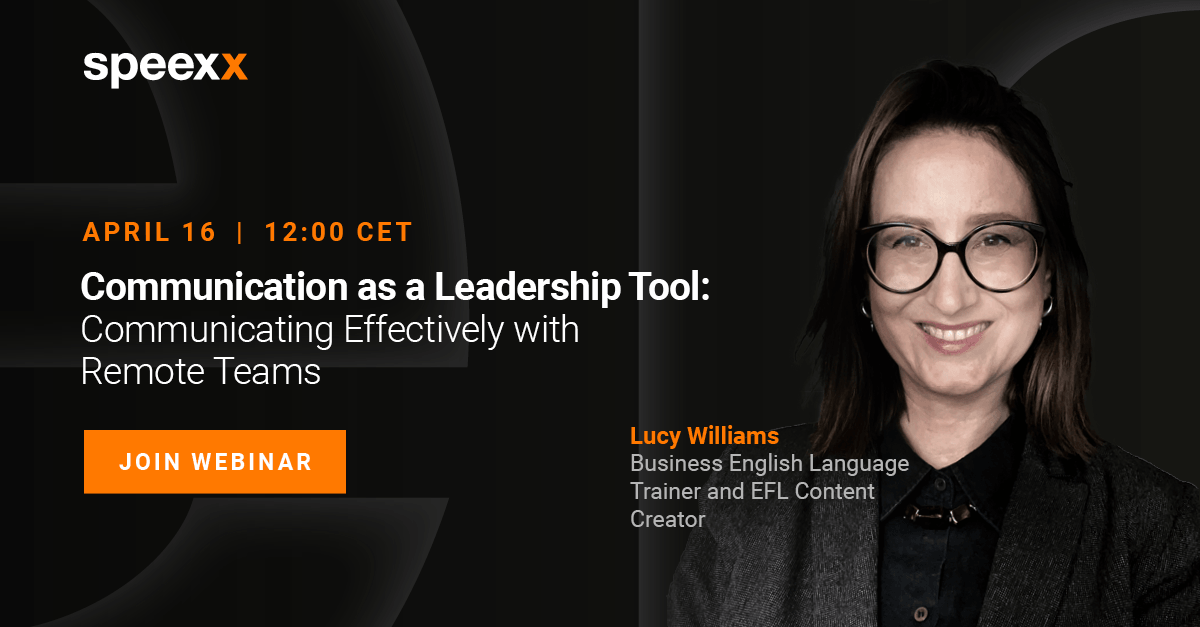
A practical masterclass for improving communication in remote and international teams, with live exercises, discussion and tools for greater clarity, inclusion and accountability.
What do remote teams really lose in communication?
Lucy Williams began with a direct question: “What do we really lose in remote communication?” She explained that distance widens gaps in context. People miss the small details that would normally clarify a situation immediately, such as a shift in tone, a concerned look or a brief facial expression.
The same interaction becomes more complex online and often more rigid. Even making a joke can require someone to raise a virtual hand or find the right moment to switch on a microphone. In person, the exchange would happen spontaneously.
Video calls remove a significant share of non-verbal signals. As context becomes thinner, people fill the gaps with their own assumptions, and those assumptions often lean negative.
Communication therefore stops being an optional skill and becomes a leadership practice. Anything left unclear eventually affects timelines, relationships and the quality of the work.
Intercultural communication: high-context and low-context cultures
Cultural differences add another layer. Speexx has explored multicultural leadership and cultural differences in more detail, and Williams returned to the distinction between high-context and low-context cultures. In high-context cultures, meaning relies heavily on the situation, the relationship, implication and what remains unsaid. Low-context cultures place more emphasis on clarity, precision and direct communication.
Remote work strips away much of the surrounding context, which makes indirect messages harder to read. One of the strongest points from the masterclass followed from that: remote teams need to make explicit what would normally remain implicit. This applies to requests and expectations, as well as responsibility, decision-making and the way hierarchy works.
Silence in a meeting does not automatically mean agreement
Silence becomes more significant in remote communication, although teams often leave it unexamined. Williams noted that people frequently interpret silence in online meetings as consent.
A quiet participant may mean something very different: unspoken disagreement, difficulty with the working language, respect for hierarchy, a need for more time to think or a technical problem they cannot easily explain.
Leadership is not about filling every pause. It requires learning to read the silence. Sometimes a leader only needs to name it, allow more time, rephrase the question or open another channel for feedback. In an international team, these choices make communication fairer and more effective.
The clarity triangle: a practical framework
The masterclass also covered practical language tools for remote leadership. The first was direction-giving, the language leaders use to set direction, give instructions and establish priorities. Williams placed the clarity triangle within this practice and described it as “a very practical framework that helps clarify four things: why something is being done, what needs to happen, who owns it and when.”
This approach is particularly useful in distributed teams, where vague statements such as “Let’s look at it as soon as possible” or “Someone can take care of it later” create more confusion than alignment. Explicit objectives, ownership and timing reduce interpretation problems and strengthen accountability.
Empathy and psychological safety in remote teams
Tools matter, but online communication also depends on empathetic language. It creates enough safety for people to ask questions, flag problems and express doubts.
Psychological safety is a leadership responsibility, particularly in remote collaboration. It reduces tension and makes genuine participation more likely. What does that look like in practice? More inclusive meetings, response times that do not punish people, ways to contribute in writing, and attention to those who speak less or feel more exposed.
Shared meaning keeps people connected
The third leadership practice Williams identified was meaning-making: connecting tasks and decisions to a shared purpose. This matters in remote teams because people often work in separate bubbles and have fewer opportunities to build a sense of belonging naturally.
Explaining why a task matters, where the team is going and which values guide the work helps people stay connected across distance. The masterclass stressed that leaders cannot stop at allocating tasks. People need to understand the purpose of the work, its context, the objectives and the effects it may have.
Informal rituals still matter online
Rituals matter online too, although they rarely emerge by themselves. Teams need to create them deliberately.
Williams shared examples from Speexx, where many teams work across Europe. Monthly book clubs, informal online coffee breaks at different times of day and other small rituals are designed to support relationships and social contact.
These activities rebuild the light social fabric that helps people understand and trust one another in person. They need to be planned and organised rather than left to chance.
Collaboration needs tools and processes, and technology helps a great deal. It still rests on human contact, which no platform or workflow can fully replace.

Better remote team communication requires practice
The final part of the masterclass covered inclusive hybrid meetings, clearer expectations and the need to test different tools. It also addressed cultural differences alongside personal styles, language levels and neurodivergence.
The session made one point especially clear. Without physical proximity, leadership depends on clarity, attention to what remains unsaid and the ability to adapt communication so that other people can understand and contribute. We are responsible for what we say and for what others understand. That responsibility grows at a distance.
Three takeaways
- In remote teams, every word carries more weight than it does in personWhen context disappears, the risk of ambiguity and misunderstanding increases.
- Clarity is leadershipExplaining why, what, who and when reduces confusion and prevents responsibility from being passed around.
- Psychological safety is also built through communicationSilence, response times, tone and inclusion shape the quality of collaboration more than teams often realise.
