
Most organizations don’t have a skills problem. They have an impact problem. The real challenge lies in how those skills are identified, developed, and applied to drive meaningful business outcomes. This is where AI in learning and leadership is starting to reshape the conversation.
At Learntec this year, Speexx and Docebo are coming together to explore exactly that. In a joint masterclass, we will look at how organizations can move from a skills-based approach to measurable impact, using AI, learning, and leadership as interconnected drivers of performance.
But before the event, it is worth unpacking why this topic matters now.

AI in Learning and Leadership: Why It Is Gaining Momentum
The shift towards skills-based organizations has been building for years. Companies want to understand what capabilities they have, what they lack, and how to close those gaps efficiently. However, traditional approaches to learning and development have struggled to keep up.
This is where AI in learning and leadership starts to make a real difference.
Organizations can move beyond static competency frameworks and outdated job descriptions. Instead, they can adopt dynamic skills mapping, real-time insights, and personalized development pathways. Leaders make better decisions, and employees gain clearer routes for growth.
More importantly, AI connects learning directly to business impact. It helps answer questions like:
- Which skills actually drive performance?
- Where are the critical gaps?
- How can we prioritize development efforts?
Without this level of insight, learning risks becoming disconnected from organizational goals.
From Skills to Impact: Bridging the Gap
Many organizations have already invested in skills frameworks. The challenge now is turning those frameworks into action.
AI in learning and leadership helps bridge this gap by identifying skills at scale across the workforce and analyzing performance data to highlight what matters most. It also enables more targeted learning interventions while supporting leaders in making better-informed talent decisions.
The shift is not just about efficiency. It is about relevance.
Employees increasingly expect development opportunities that are tailored, meaningful, and aligned with their career goals. At the same time, organizations need to ensure that learning investments translate into measurable outcomes.
When integrated effectively, AI makes it possible to align individual growth with organizational priorities in a much more precise way.
Discover how to turn cross-cultural communication into real performance advantage.
The Role of Leadership in an AI-Driven Learning Strategy
While AI provides the tools, leadership provides the direction.
AI in learning and leadership is not just a technological shift. It is a cultural one. Leaders need to embrace data-driven decision-making, encourage continuous learning, create environments where experimentation is supported, and ensure the ethical and transparent use of AI.
Without strong leadership, even the most advanced AI solutions will fall short.
Leaders play a key role in interpreting insights, setting priorities, and ensuring that learning initiatives are aligned with broader business strategies. They also need to build trust, helping employees understand how AI is being used and how it benefits their development.
In this sense, AI does not replace leadership. It enhances it.
Real-World Applications of AI in Learning and Leadership
The conversation around AI can sometimes feel abstract, but its applications are already tangible.
Organizations are using AI in learning and leadership to:
- Automatically identify emerging skills based on market trends
- Personalize learning journeys for employees at scale
- Match employees with mentors, coaches, or projects
- Predict future skill needs and workforce gaps
These use cases are not theoretical. They are already shaping how HR and L&D teams operate.
At Speexx, the focus is on delivering people development solutions that combine language training, business coaching, and mentoring with intelligent technology. In collaboration with Docebo, a leader in learning platforms, this approach becomes even more powerful.
Together, the goal is to create ecosystems where learning is continuous, targeted, and directly linked to performance.
Why Collaboration Matters: Speexx and Docebo
Partnerships are essential in making AI in learning and leadership work effectively.
No single platform or provider can cover every aspect of the learning ecosystem. By combining expertise, organizations can deliver more integrated and impactful solutions.
The collaboration between Speexx and Docebo brings together:
- Advanced learning platform capabilities
- Personalized people development solutions
- Data-driven insights powered by AI
This joint approach allows organizations to move beyond fragmented learning experiences and towards a more cohesive strategy.
It also reflects a broader trend in the industry: the need for interoperability, integration, and shared innovation.

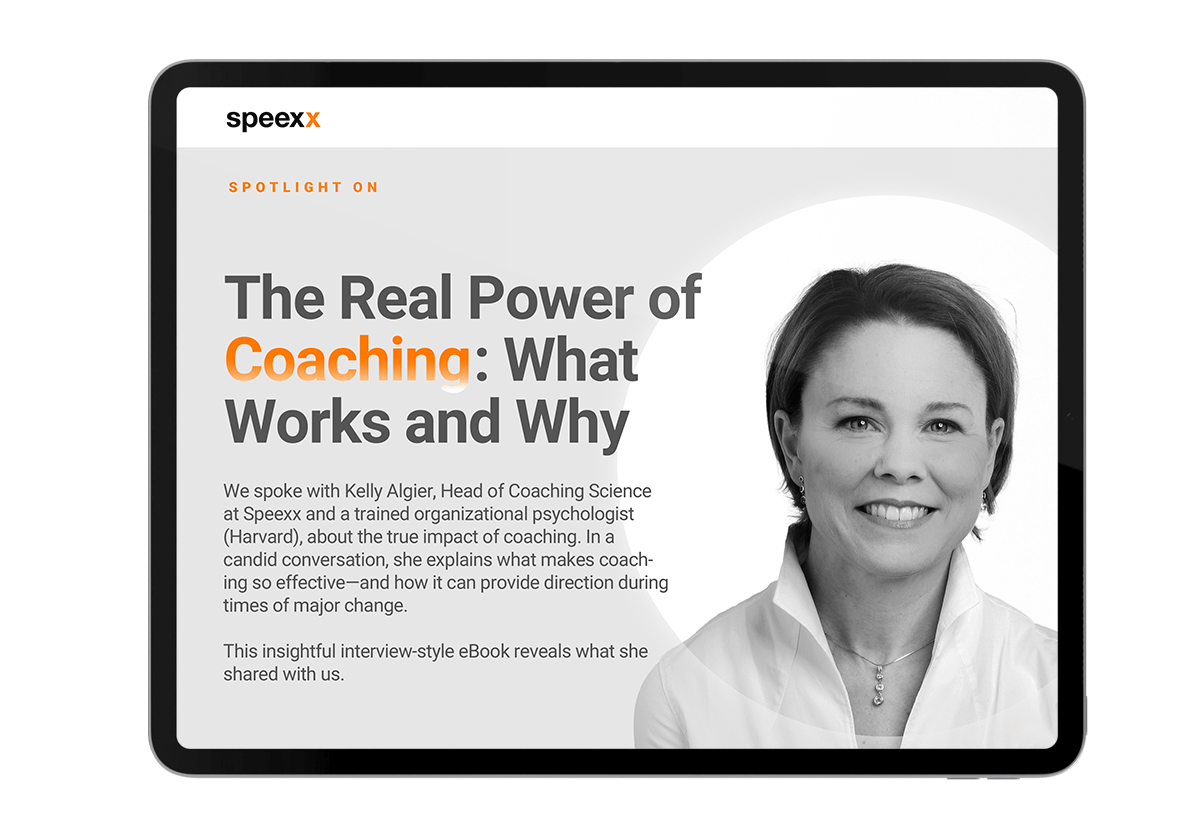
Harvard-trained organisational psychologist Kelly Algier explores why coaching works, what makes it powerful, and how it helps us navigate change.
Join the Conversation at Learntec
To explore these ideas in more depth, Speexx and Docebo will host a masterclass at Learntec on May 7.
The session, titled “From Skills to Impact: How AI, Learning and Leadership Make a Difference in Organizations”, will take a practical and interactive approach.
Participants can expect:
- Insights into how AI is transforming learning and leadership
- Real-world examples from organizations already applying these concepts
- A speed-dating format designed to encourage discussion and exchange
The focus will be on how HR and L&D teams can use AI to identify skills and steer development in a targeted way, ensuring that learning initiatives deliver real impact.
It goes beyond theory. It is about practical strategies that can be applied immediately.
If you are interested in how AI in learning and leadership can drive real impact in your organization, join us at Learntec on May 7.
The masterclass is free to attend, but places are limited.
To secure your spot and be part of the conversation register now.