
Coaching has become an essential tool for developing people and improving performance in modern organizations. According to the International Coaching Federation, organizations are increasingly integrating coaching into leadership development and people development strategies to support collaboration, engagement, and continuous learning.
Two formats in particular are gaining attention: team coaching and group coaching.
The terms team coaching and group coaching are often used interchangeably, creating confusion about what each approach actually delivers. For HR and L&D leaders, understanding the difference is essential when designing coaching programs that align with organizational goals.
This article explores how the two approaches differ, the value each approach can deliver, and when organizations may choose one over the other.

What Is Team Coaching?
Team coaching focuses on improving the effectiveness of an existing team that works together toward shared objectives.
In this format, a coach works with a group of individuals who already collaborate within the organization, such as leadership teams, project teams, or cross-functional teams. The emphasis is not only on individual development but also on how the team operates as a system.
Team coaching typically addresses areas such as communication, decision-making, accountability, and alignment around shared goals. The aim is to strengthen how team members collaborate, solve problems, and deliver results together.
As organizations place greater emphasis on collaboration and collective leadership, research into team coaching continues to grow, with studies highlighting its role in improving alignment, communication, and team effectiveness.
Research in organizational behavior shows that team dynamics strongly influence performance, particularly in complex and collaborative work environments where outcomes depend on collective effort. David Clutterbuck, author of Coaching the Team at Work, highlights that effective teams rely on clear shared goals, strong relationships, and open communication, factors that structured team coaching is designed to support.
What Is Group Coaching?
Group coaching brings together individuals who share similar development goals but do not necessarily work together in the same team.
Participants often come from different departments, locations, or business units. For example, organizations may bring together managers from across the company, high-potential employees, or professionals at a similar career stage.
In group coaching, the focus is primarily on individual development supported by peer learning. Participants explore challenges, reflect on their experiences, and gain insights from both the coachee’s perspective and the perspectives of others in the group.
This format encourages knowledge sharing, reflection, and collective problem-solving. Many organizations use group coaching to scale leadership development initiatives while creating opportunities for employees to learn from one another.
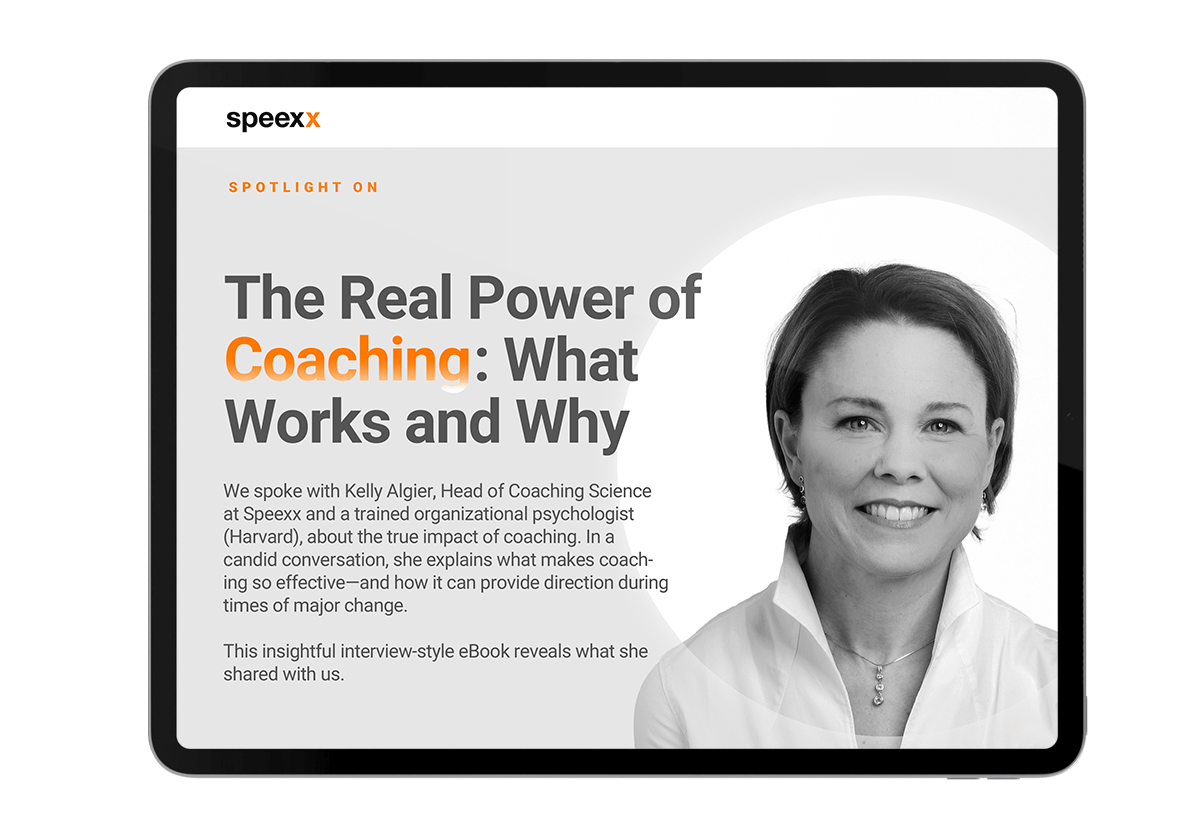
A practical guide to the principles that make coaching truly effective.
Team Coaching vs Group Coaching: The Key Differences
The key distinction between team coaching and group coaching lies in the purpose and composition of the participants.
In team coaching, the participants already work together as a team and share common goals and responsibilities. The coaching process focuses on improving team collaboration, communication, and performance.
In group coaching, participants do not typically work together on a daily basis. Instead, they are brought together because they share similar development objectives. The focus is on individual learning supported by discussion, reflection, and peer feedback.
In a nutshell, team coaching improves how a team performs together, while group coaching supports the development of individuals within a shared learning environment.
When Should Organizations Use Team Coaching?
Team coaching is particularly valuable in situations where teams need to strengthen collaboration, alignment, and shared accountability.
Organisations often turn to team coaching during periods of strategic change, when new teams are forming, or when cross-functional teams need to work together more effectively.
It can also be useful when teams experience challenges related to communication, decision-making, or role clarity.
By focusing on collective behaviors and shared goals, team coaching helps teams build trust, improve coordination, and ultimately enhance overall performance. Peter Hawkins, founder of Systemic Team Coaching and author of Leadership Team Coaching, emphasizes that effective team coaching focuses not only on internal team dynamics but also on how the team delivers value to the wider organization and its stakeholders.

How coaching drives measurable business results and lasting performance gains.
When is Group Coaching the Right Choice?
Group coaching is often used as part of broader leadership development and talent development initiatives.
It is particularly effective when organizations want to support managers across different departments, develop emerging leaders, or create communities of practice where employees can learn from one another’s experiences.
Because several participants can take part in the same program, group coaching also allows organizations to scale coaching more efficiently while maintaining meaningful interaction and reflection.
Why Many Organizations Use Both Approaches
Team coaching and group coaching are not competing approaches. In many cases, they complement each other.
Team coaching helps improve how teams collaborate and perform together, while group coaching supports individual development and leadership capability across the organization.
By combining both approaches, organizations can strengthen both collective performance and individual growth, creating a more collaborative and resilient workplace.
Coaching Without Limits: Anytime, Anywhere, Measurable
Speexx Coaching supports global organizations by delivering scalable, high-quality coaching experiences across regions, languages, and time zones. Through its digital platform, employees can access one-to-one, team, and group coaching anytime and from anywhere, making development flexible and easy to integrate into daily work. At the same time, built-in tracking and reporting tools give HR and L&D leaders full visibility into participation, progress, and outcomes, enabling them to measure impact and continuously optimize their coaching strategy.
This commitment to quality was further reinforced through an initiative with ICF Germany. Speexx became the first organization to have its team coaching framework independently audited, setting a new benchmark for standards-aligned, high-impact coaching at scale. You can read more in the official announcement on the successful completion of the independent audit of the Speexx Team Coaching Framework.
Conclusion
As organizations continue to invest in coaching, understanding the difference between team coaching vs group coaching is becoming increasingly important.
Both approaches offer valuable opportunities to develop people, improve collaboration, and support organizational performance. The key is choosing the format that best aligns with the objectives of the program.
For HR and L&D leaders, a well-designed coaching strategy that combines different formats can help create scalable, impactful development experiences that benefit both individuals and teams.